By Township Canada
How Saskatchewan's New Satellite Crop Insurance Uses Legal Land Descriptions
Saskatchewan's satellite forage insurance replaces rainfall gauges with satellite data. Coverage is set at the township level - here's what that means for producers.
If you run cattle or grow hay in Saskatchewan, you probably know the old Forage Rainfall Insurance Program (FRIP) had a problem: a rain gauge 30 kilometres from your pasture doesn't tell you much about what actually fell on your land. For 2026, Saskatchewan Crop Insurance Corporation (SCIC) replaced FRIP with a new satellite-based forage insurance program - and the way coverage is calculated ties directly to legal land descriptions and the township grid.
Applications close March 31, 2026. Here's what producers and crop insurance adjusters need to know.
What Changed: Satellites Replace Rain Gauges
Under the old FRIP model, payouts were triggered when rainfall at a designated weather station dropped below a threshold. The problem was obvious to anyone who's worked in agriculture on the prairies: rain doesn't fall evenly. A thunderstorm could drench one township and miss the next one entirely, but if both shared the same reference station, they got the same payout - or lack of one.
The new satellite forage insurance program uses remote sensing data to measure actual soil moisture and vegetation conditions across Saskatchewan. Instead of relying on a single ground measurement, satellite imagery captures conditions across entire areas, giving a more accurate picture of forage growing conditions on a township-by-township basis.
Why Townships Matter for Your Coverage
Here's where legal land descriptions come in. Under the new program, coverage parameters - including the premium rate and payout triggers - are calculated at the township level.
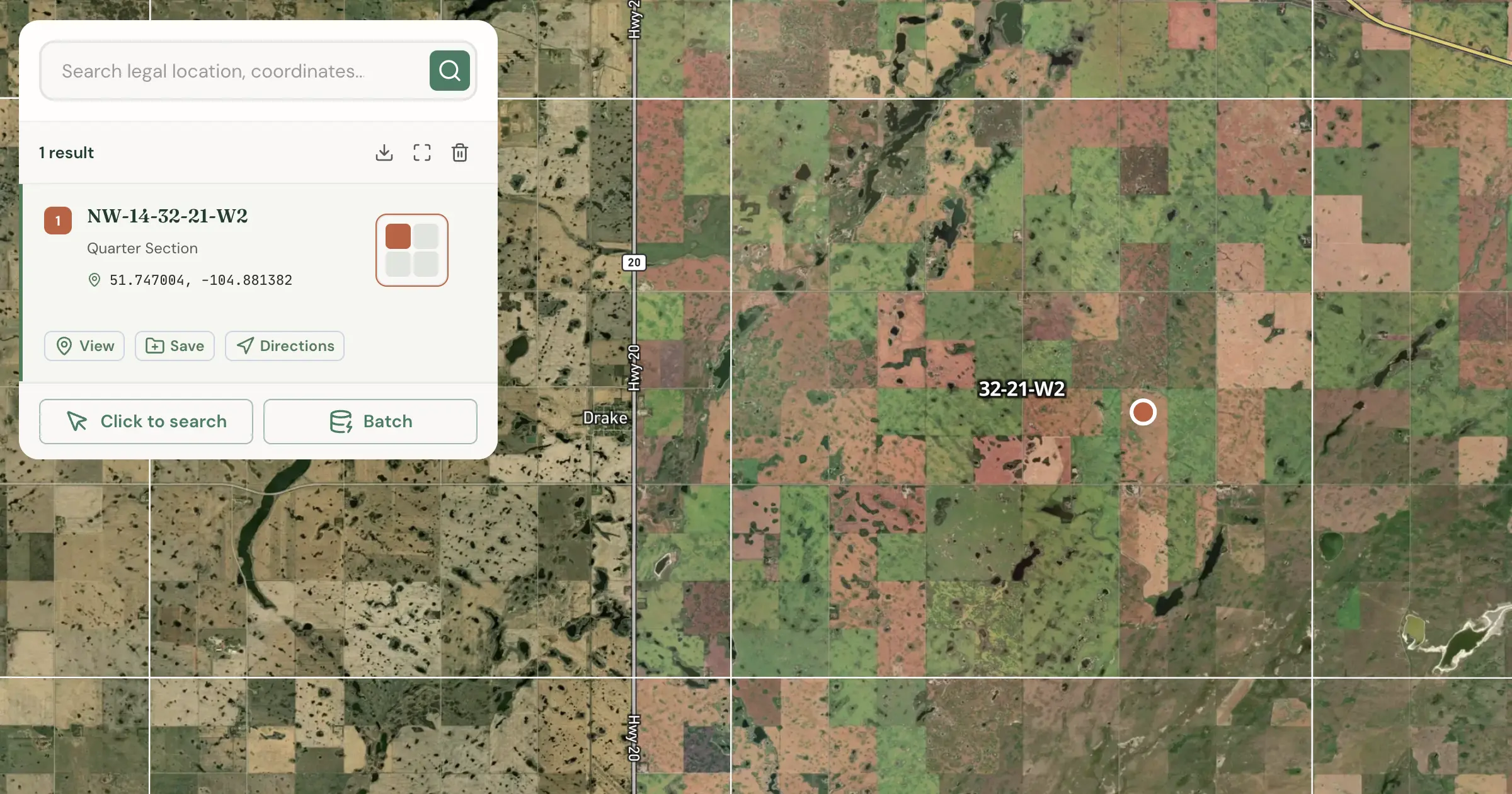
In the Dominion Land Survey (DLS) system that covers Saskatchewan, a township is a 6-by-6 grid of sections, totalling 36 sections or roughly 23,000 acres. Each township is identified by its township number (north-south position) and range number (east-west position from a meridian). For example, Township 32, Range 21, West of the 2nd Meridian (Twp 32-Rg 21-W2M) covers an area southwest of Yorkton.
That means two quarter sections in the same township get the same satellite-derived coverage assessment, but a quarter section one mile north - if it falls in a different township - could have a different premium and trigger point. Knowing exactly which township your forage land sits in matters more than it used to.
How to Check Which Township Your Land Is In
Most Saskatchewan producers know their quarter section by heart. The format looks like this: NW 14-032-21 W2M - the northwest quarter of Section 14, Township 32, Range 21, West of the 2nd Meridian. The township number is already embedded in that description (032 in this example).
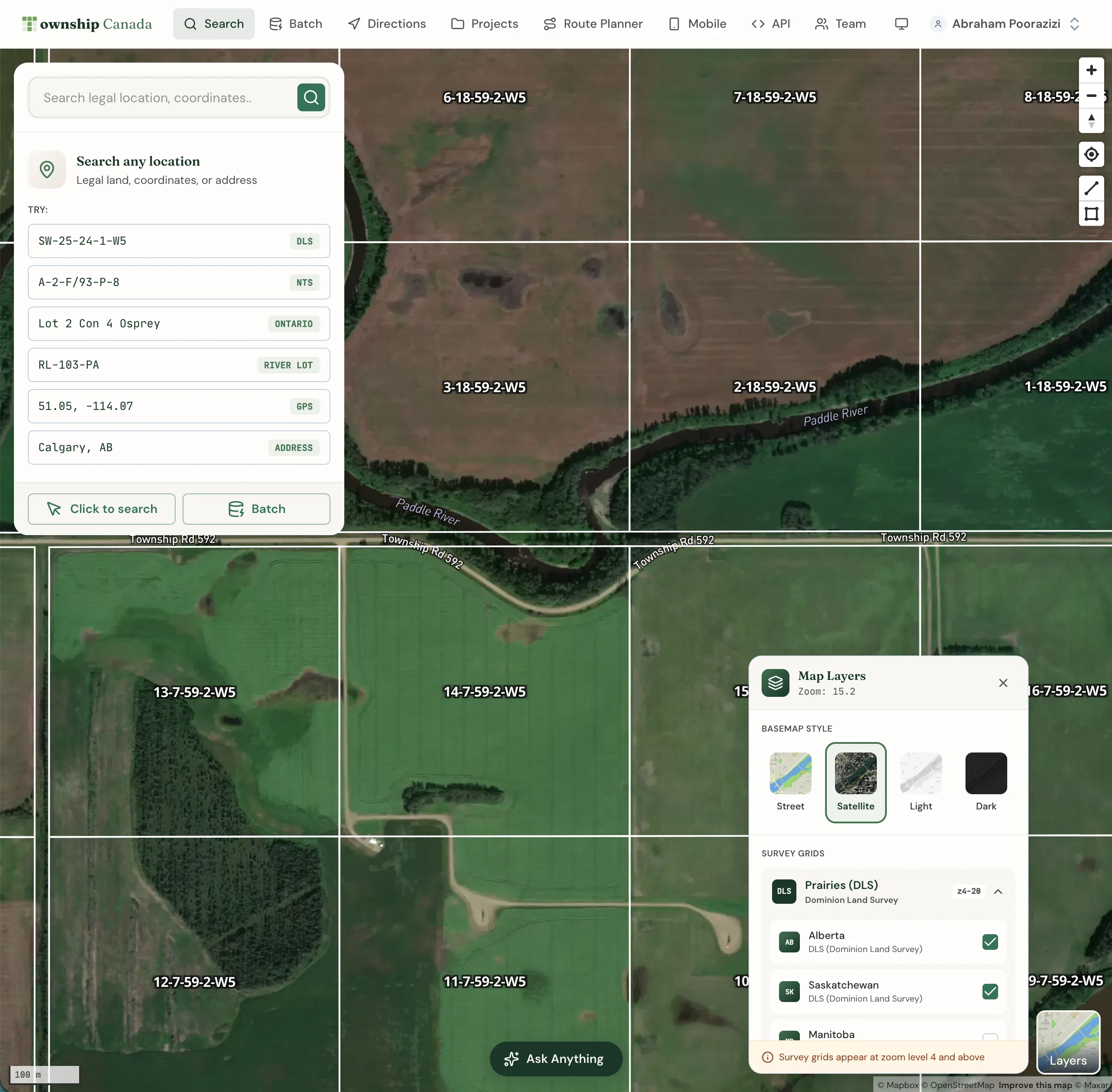
But if you're buying or leasing new pasture, or if you're a crop insurance adjuster processing applications across dozens of parcels, confirming township boundaries for unfamiliar land takes time. You can enter any Saskatchewan legal land description into Township Canada's converter and see exactly where it sits on the map - including which township it belongs to and the boundaries of that township on the DLS grid overlay.
For example, entering "NW 14-032-21 W2M" returns GPS coordinates (approximately 51.25, -103.27) and shows the parcel on the survey grid map. You can visually confirm which township the parcel falls in, see neighbouring townships, and check if parcels on either side of a township line end up in different coverage zones.
What This Means for Producers
A few practical points for the 2026 application season:
- Check every parcel separately. If you have forage on quarter sections that span two townships, they may fall under different coverage calculations. Don't assume uniform coverage across your operation.
- New land, new township. If you're leasing additional pasture for 2026, confirm which township it falls in before assuming the same coverage terms as your home quarter.
- Keep records organized. SCIC requires legal land descriptions on every application. Having accurate quarter section descriptions ready - and knowing which township each one belongs to - speeds up the process.
- Coverage is for tame and native forage. The satellite program covers hay and pasture land. Annual crops are handled separately under Saskatchewan's multi-peril crop insurance.
Manitoba Is Watching Too
Saskatchewan isn't alone in moving toward satellite-based insurance. Manitoba Agricultural Services Corporation (MASC) has been piloting a similar satellite-based forage program for the 2026 crop year. Manitoba also uses the DLS system, so the same township-level logic applies - though Manitoba adds the complexity of river lots near Winnipeg and along the Red and Assiniboine Rivers.
If you operate in both provinces, tracking which survey system applies to each parcel becomes even more relevant.
The March 31 Deadline
Applications for Saskatchewan's satellite forage insurance close on March 31, 2026. If you haven't applied yet, you'll need the legal land description for every forage quarter section you want to insure. Contact your local SCIC office or visit their website to start the application.
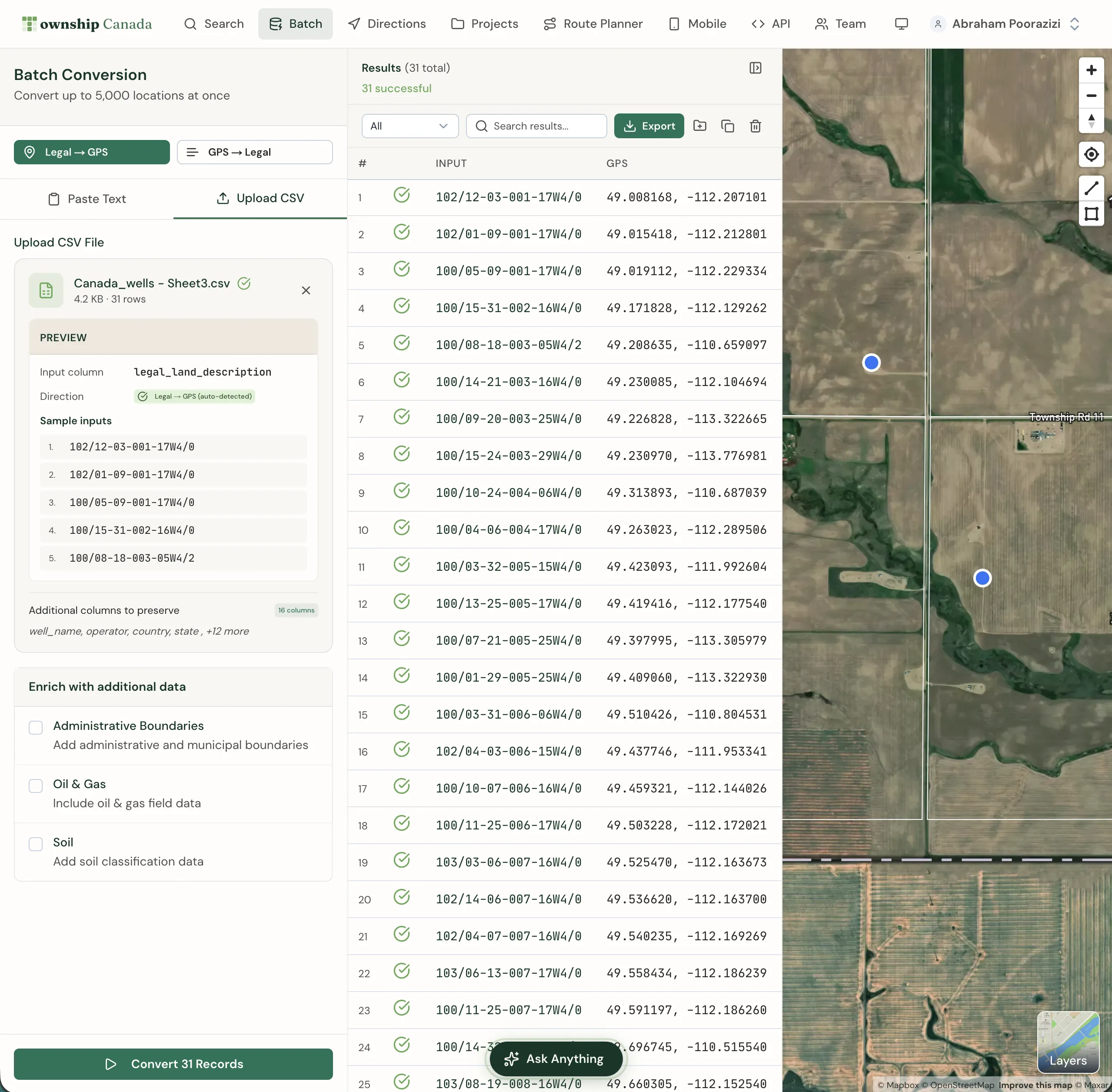
If you need to look up or verify legal land descriptions for your forage land, Township Canada's converter handles all Saskatchewan DLS formats - quarter sections, LSDs, sections, and full townships. You can also use the batch conversion tool (Business plan required) if you're processing multiple parcels at once, which is especially useful for adjusters and agencies handling applications across a wide area.
Satellite technology is making forage insurance more accurate. The township grid that Saskatchewan producers have used for generations is the framework that ties it all together.